When you travel to the small Himalayan kingdom of Bhutan, you may find yourself thinking: This is the way everyone should live.
It’s the only country in the world that measures its progress in achieving happiness, rather than economic growth. And that’s not just empty wellness-speak; Bhutan measures and tries to improve its people’s psychological wellbeing, health, living standards, and more.1
Bhutan is also serious about sustainability. So serious, in fact, that it has committed to keeping 60% of its land green. Tourist numbers are restricted. Visitors must pay a daily fee of $100, which is invested in health care, education, and conservation projects.2 Tourists are no longer required to sign up for a state-sponsored tour, but guides are required for certain cultural sites.
Bhutan remains a pristine, peaceful, and culturally rich destination. You’ll be enchanted by the hospitality of its people, the beauty of its mountain landscapes, and the reverence held for its Buddhist faith traditions. This five-minute guide will introduce you to the highlights of Bhutan travel.
3 reasons to buy travel insurance for Bhutan
1. Insurance protects you in case of unexpected cancellations.
Travel to Bhutan isn’t cheap. On the low end, a traveler may spend $250 per day; on the high end, travel costs may be $2,000 per day.3 Trip cancellation and trip interruption benefits can reimburse your nonrefundable trip costs if you have to cancel your trip or cut it short for a covered reason.
2. Travel insurance is crucial for medical emergencies.
Without emergency medical benefits, you could be in trouble if you get sick or seriously injured in Bhutan. “Public medical clinics lack basic resources and supplies,” the U.S. Department of State explains. “Patients pay all the costs for going to a hospital or moving between them.” A plan with emergency medical benefits ensures you get the best care available and can reimburse you for the cost of covered care.
3. Emergency transportation benefits can be a lifesaver.
Medical care in Bhutan is generally not up to Western standards. For serious conditions, travelers may need to be evacuated to Singapore or Bangkok.4 A travel insurance plan with emergency transportation benefits can reimburse the high costs of a medical evacuation, plus your transportation home and more, following a covered medical emergency.
3 of the best travel insurance plans for Bhutan
A solid travel protection plan should include the three benefits described above as well as protection for trip delays; delayed, lost, stolen, and damaged baggage protection; and 24-hour assistance. These are our recommended travel insurance plans for Bhutan (or any other international trip).
- OneTrip Prime is our most popular plan for international trips. OneTrip Prime (as well as OneTrip Premier) covers children 17 and younger for free when traveling with a parent or grandparent (not available on policies issued to Pennsylvania residents).
- OneTrip Premier doubles most of the post-departure benefit limits of OneTrip Prime. Both plans include SmartBenefits®, which allow you to receive a fixed inconvenience payment of $100 per insured person, per day, for a covered travel delay or baggage delay. No receipts required!
- AllTrips Premier can protect every trip you take (up to 90 days in length) for 365 days and can cover your entire household. Choose your preferred benefit level for trip cancellation/interruption.
More than 55 million Americans each year choose Allianz Travel Insurance to protect them on their travels. Get a quote for your next trip.
3 of the best things to do in Bhutan
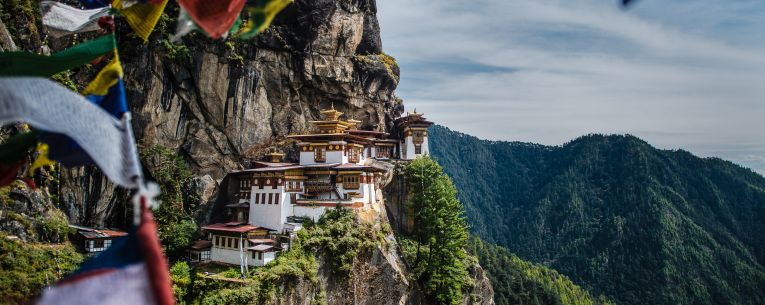
- Climb to Paro Taktsang. The mountainside monastery called the “Tiger’s Nest” is the most famous attraction in Bhutan. This sacred shrine was built in the late 1600s, burned in 1998, and was restored to its original splendor a few years later. You can hike to the monastery, which takes 2-3 hours, or ride a horse up (but you’ll have to make the return trip on foot.)
- Participate in Bhutan’s Buddhist practices. Vajrayana Buddhism (also known as Tibetan Buddhism) is practiced by most people in Bhutan, and visitors are welcome to observe and learn about this faith. You may hoist prayer flags, meditate, or light butter lamps: a symbolic way to dispel darkness from the world that also invites the participant to reflect on the impermanence and interdependence of all things.
- Explore a dzong. These traditional Bhutanese fortresses were constructed in the 1600s as religious, military, and government centers. Some are more utilitarian, while others—like the famous Punakha Dzong—have ornate carvings and decorations. Try to time your visit to coincide with a tshechu: a festival that typically includes folk music and masked dance performances.
3 of the best resorts in Bhutan
andBeyond Punakha River Lodge is a stunningly beautiful and secluded luxury lodge with just 8 suites and villas. It’s nestled in the Punakha River valley, a place known for balmy weather, rafting and hiking, and charismatic wildlife like red pandas and snow leopards. The staff specialize in delightful surprises for guests, like a picnic breakfast after a hike or a pop-up cocktail bar to cap off a day of touring the valley.5
With an elevation of 10,300 feet, getting to Gangtey Lodge—by car or helicopter—is quite a journey. Your rewards are a greeting song from the staff and sweeping views over a 17th-century monastery, farms, and forests. This family-owned luxury resort invites guests to hike the mountain trails, enjoy a fireside massage, and wind down with a traditional Bhutanese hot stone bath.
While Bhutan is known for its luxury resorts, there are lovely budget-priced hotels too. Cholay Khangzang, a hotel on the outskirts of Thimphu, offers large, immaculate rooms, delicious food, and views of the surrounding mountains. Rates are often under $50 per night.
3 of the best restaurants in Bhutan
Travel writer Chris Dwyer says that Bhutanese specialty ema datshi is one of his favorite dishes in the entire world. “The hugely popular stew is made with onion, the admittedly acquired taste of fermented yak cheese, then garlic and red or green chilis.” A great place to get this fiery delight is the restaurant at the Folk Heritage Museum in Thimphu. Yes, it’s touristy, but visitors appreciate the lunch buffet that lets you try several traditional dishes.
Also in Thimphu is the charming Babesa Village Restaurant, which occupies a 600-year-old house. Guests watch in amazement as servers climb up and down steep stairs with trays full of hearty food, like phaksha paa (stir-fried pork with chili peppers) and jasha maroo (chicken curry).
In Bhutan, fine dining is most often found at resorts. One of the most acclaimed restaurants is Bukhari at Como Uma Paro, which is a favorite of Bhutan’s royal family. Sit in a circular pavilion that overlooks the Paro Valley and enjoy meals built on seasonal, local ingredients sourced by Head Chef Tshering Lhaden: red rice, freshly-churned butter, farm cheeses, and honey.
What do I need to travel to Bhutan?






Share this Page